A vibration table is the core component of a vibration testing system, responsible for generating vibrations. Its main function is to convert electrical energy into mechanical vibrations and transmit these vibrations to the test product. Depending on the driving method and application requirements, vibration tables can be classified into various types, detailed below:
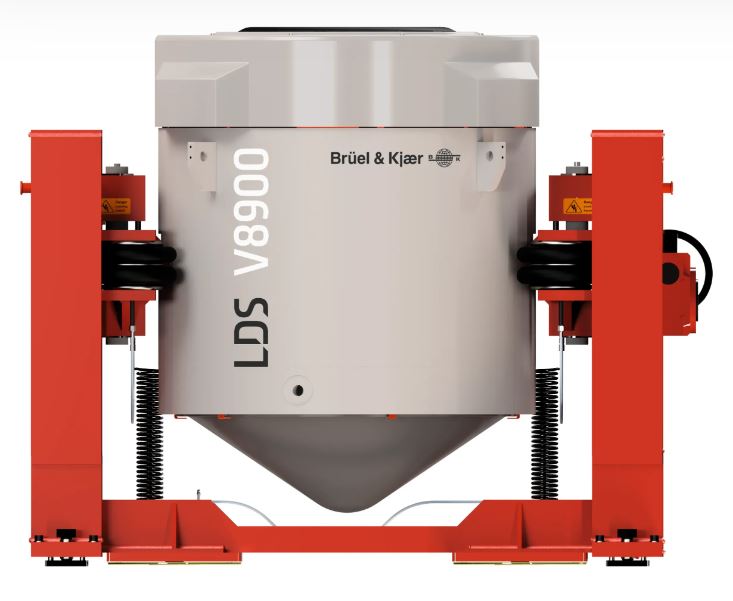
Electrodynamic Shaker
Principle : The electromagnetic vibration table is designed based on Fleming’s left-hand rule. When current passes through a coil placed in a magnetic field, a force perpendicular to the direction of the current and the magnetic field is generated. This force is used to drive the vibration table to vibrate.
Structure : It mainly consists of a magnet or electromagnet, a movable coil (or armature), and a vibration table connected to the test object. The coil is driven by an electric current in the magnetic field, which causes the vibration table to vibrate.
Features : Capable of generating precisely controlled vibration waveforms, including sine waves, random waves, and shock waves. Offers a wide frequency range and high vibration velocity . Suitable for various applications , including electronic components, automotive parts, and aerospace equipment. Based on cooling methods, it can be divided into air-cooled and water-cooled types . Water-cooled types are typically used in applications requiring higher excitation forces.
Applications : Widely used in product reliability testing , durability testing , and product development . Also commonly used to simulate product transportation and usage environments .
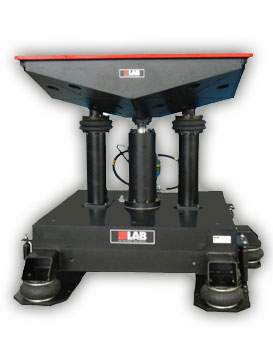
Principle : The hydraulic system is electrically activated to drive the vibration table to generate vibration.
Construction : Includes hydraulic cylinder, servo valve and vibration table.
Features : High excitation force , suitable for testing heavier or larger products. High adjustability , suitable for medium-range applications. Long stroke , suitable for tests requiring significant displacement.
Applications : Commonly used in automotive , aerospace , and civil engineering fields. It can be used for low-frequency, large-displacement testing, such as simulating earthquakes.
THP Systems HV Hydraulic Shaker (source: www.thp-systems.com)
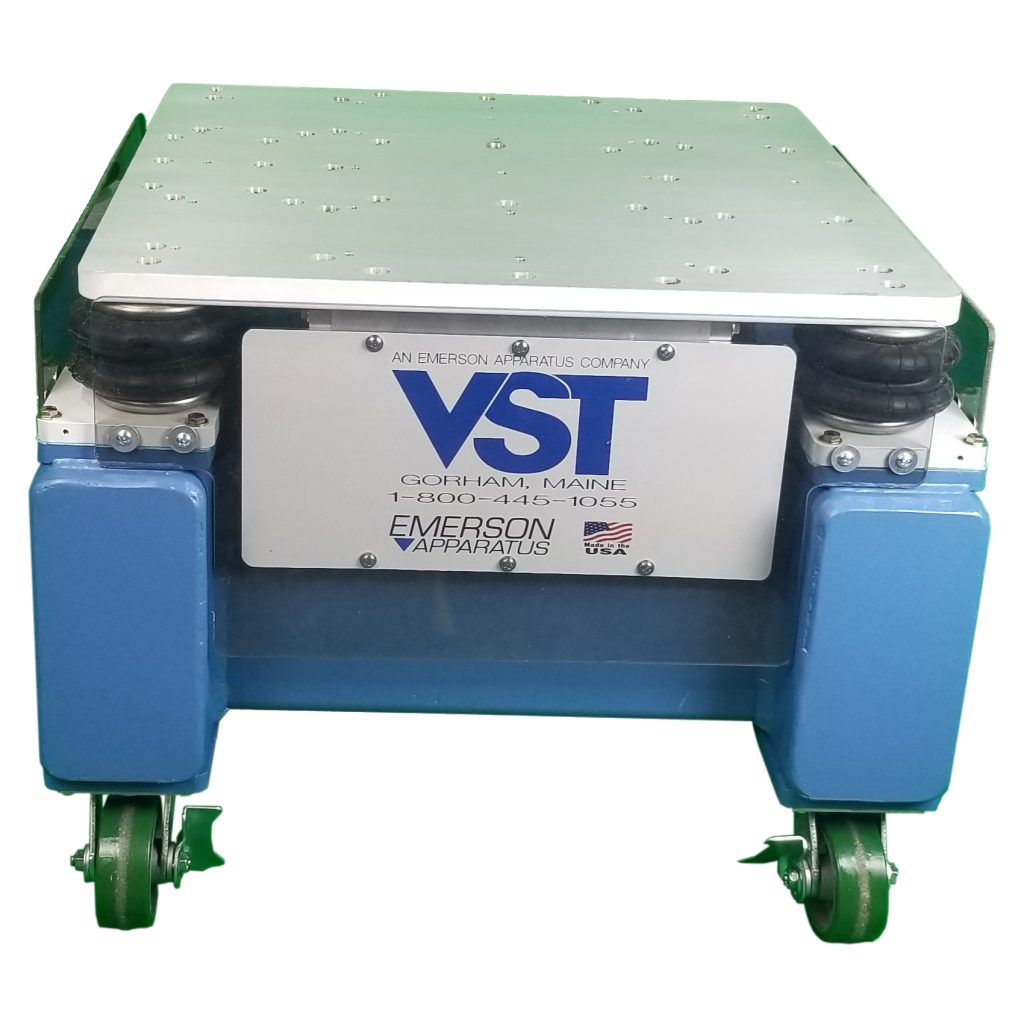
Mechanical Shaker
Principle : Vibration is generated by the movement of mechanical structures.
Construction : Vibration is typically generated using cam, crank, or connecting rod mechanisms.
Features : Simple structure , easy operation , and high reliability . Limitations include vibration adjustment and speed . Cost is generally low.
Applications : Suitable for basic vibration testing or teaching demonstrations . Less common in industrial applications .
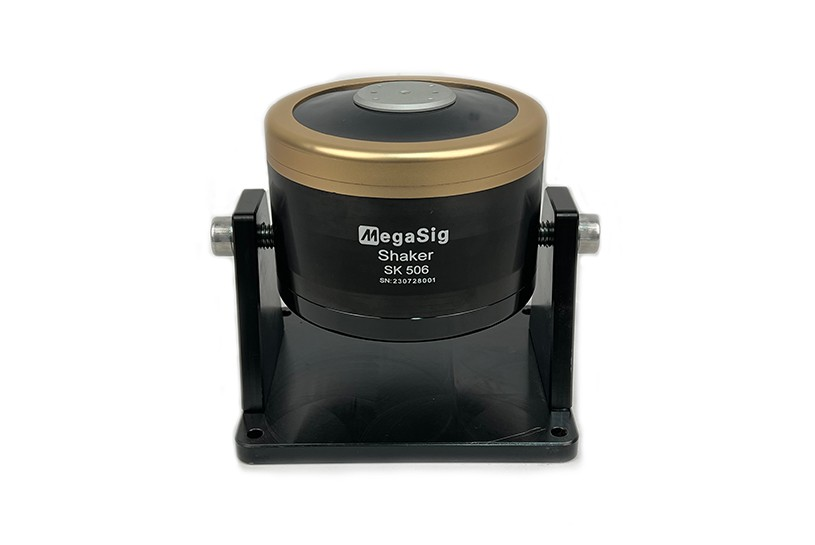
Principle : Similar to electromagnetic vibration tables, permanent magnet vibration tables also operate based on the principle of Fleming’s left-hand rule . However, permanent magnet vibration tables use permanent magnets to generate magnetic fields instead of electromagnets, which makes their structure relatively simple.
Structure : A stable magnetic field is provided by a permanent magnet . The coil (armature) is placed in the magnetic field and moves under the action of the magnetic force when current flows through it. The vibration table is connected to the coil, converting the coil’s motion into vibration and transmitting the vibration to the test product.
Features : Simple structure and compact size , suitable for laboratory or desktop applications. Low excitation force , suitable for smaller or lighter test products. Compared to other types of vibration tables, permanent magnet vibration tables typically have a higher frequency range . Due to their relatively simple structure, manufacturing costs are relatively low.
Applications : Due to their small size and ease of operation, permanent magnet vibration tables are often used in teaching demonstrations and laboratory research . They can also be used to test small electronic components and sensors . Furthermore, because they can provide high-frequency vibrations, they can sometimes be used for structural modal analysis.
MegaSig SK 506 permanent magnet vibration table (source: megasig.com)
Choose a suitable vibration table
The following factors should be considered when selecting a suitable shaking table:
Test product size and weight : Larger and heavier products require larger vibration tables to provide higher excitation force.
Required vibration type and frequency range : Different applications require different types of vibration and frequency ranges to complete the test.
Test standard requirements : Some standards may have specific requirements for the performance of the shaking table.
Budget : The prices of different types of vibration tables vary greatly, and you need to consider your budget.
In conclusion, selecting a suitable vibration table is a crucial prerequisite for ensuring accurate and reliable vibration test results. Product manufacturers need to comprehensively consider factors such as the characteristics of the product being tested, testing requirements, and budget.