I. Overview
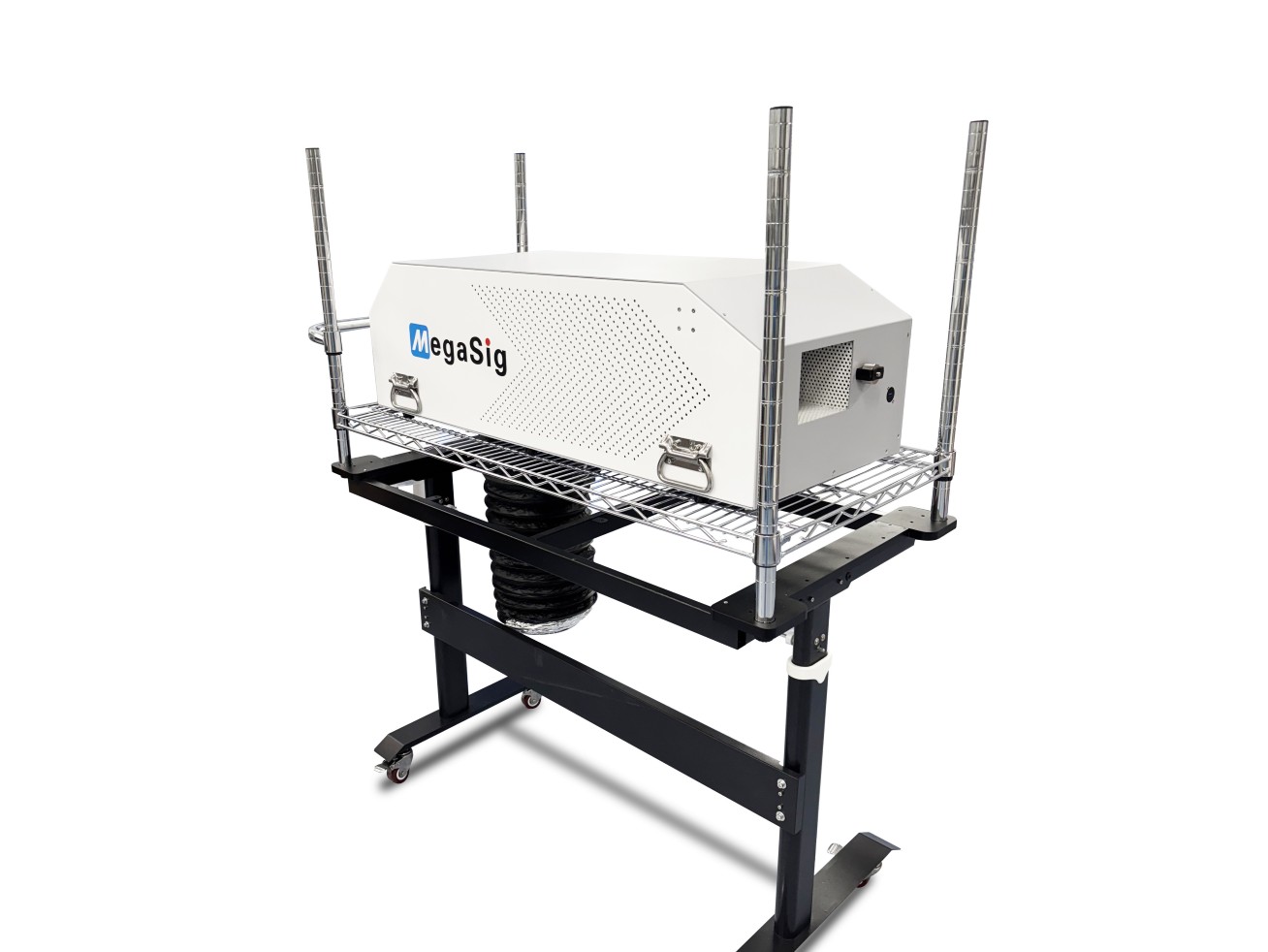
In the development of modern high-end wireless earphones (such as TWS) and communication devices, effectively suppressing wind noise in outdoor environments is a major challenge in validating noise reduction algorithms and mechanical designs. The MegaSig WT 105 is a medium-sized , programmable wind noise generator specifically designed for wind noise testing . It overcomes the shortcomings of traditional fans, which struggle to control wind conditions, providing a stable and varied airflow source. It supports control via a PC (serial port communication) or a touchscreen on the device, making it a powerful tool for engineers to create products with excellent wind noise reduction performance.
II. Core Functions and Technological Advantages of the Product
1. Powerful and wide-range airflow adjustment:
Conventional fans typically provide only 3 to 5 m/s airflow, while the WT 105 boasts a wide adjustable airflow range of 3 to 15 m/s . This powerful airflow meets the demands of more stringent extreme environment testing.
2. Diverse Wind Speed Modes for Realistic Environments:
To more realistically simulate natural wind, higher demands are placed on noise reduction algorithms and headphone structural design. The WT 105 features four built-in wind speed modes:
- Steady state: The airflow output by the device is stable at the set wind speed value.
- Random fluctuation: Based on the set wind speed, random fluctuations with a maximum value within approximately 1 m/s.
- Cyclic fluctuation: Following the pattern of “positive deviation fluctuation -> set wind speed -> negative deviation fluctuation -> set wind speed”, the fluctuation occurs in cycles at 1-second intervals.
- Custom Fluctuations: Allows engineers to set wind speed changes (range -10 to 10) at 10 different time points within 20 seconds through the editor interface, and to define complex wind speed actions themselves.
3. Ultra-Quiet Design and Precision Silencing Structure:
Wind noise testing is most vulnerable to interference from the mechanical noise of the fan itself, which can disrupt microphone pickup. The WT 105 features an ultra-quiet design; even at maximum wind speed (15 m/s), the device’s operating noise is below 60 dBA. This is thanks to its precise internal silencing duct design: the inlet duct uses 0.5mm non-woven fabric, 3cm sound-absorbing cotton, and 1mm aluminum foil to reduce inlet noise; the outlet duct uses double-layered 1mm iron plates sandwiching 80mm thick sound-absorbing cotton, significantly reducing fan operating noise.
4. This highly automated and software-integrated
equipment not only features an intuitive touchscreen display (providing functions such as wind speed calibration, start/stop, and mode switching), but also accepts programmable operation commands via a DB9 serial port. Its communication parameters are Baud Rate 115200, ensuring seamless compatibility with AudioExpert testing software, making it ideal for integration into automated production lines or R&D testing stations.
III. Usage Scenarios
Based on its powerful wind field simulation capabilities, the WT 105 is mainly used in the following scenarios:
- Active noise cancellation (ANC) and call noise reduction algorithm verification: Through complex custom or random wind speed modes, the algorithm convergence speed and wind noise reduction effect of the headphones in dynamic wind shearing environment are tested.
- Acoustic design evaluation: By using a dedicated air outlet (130 x 100 mm) and adjusting the distance, the actual effectiveness of the design of the microphone opening position, windproof mesh material, and other structural elements in reducing wind noise was evaluated. In an anechoic chamber environment with 9 dBA, at a distance of 600 mm from the air outlet (45-degree angle test point), the background noise at a wind speed of 3 m/s was only 11.6 dBA, and even under full load at 15 m/s, it was only 53.8 dBA, representing an extremely pure wind field test environment.
IV. Specifications
- Wind speed range: 3 m/s ~ 15 m/s
- Operating noise: < 60 dBA (at maximum wind speed)
- Programmable Interface: DB9 Serial Port
- Air outlet dimensions (L x W): 130 x 100 mm
- Bare unit dimensions (L x W x H): 950.5 x 383 x 289 mm (Small size, convenient for setting up a test environment)
- Bracket dimensions (L x W x H): 1120 x 530 x 855~1295 mm (customized mounting brackets available)
- Maximum power: 150 W
- Applicable temperature: -10℃ ~ 50℃
V. Conclusion
The MegaSig WT 105 medium-sized programmable wind noise source perfectly solves the three major pain points of traditional wind noise testing: “uncontrollable wind speed, unrealistic wind field, and excessively high background noise”.
For acoustic R&D teams dedicated to improving outdoor call quality and noise cancellation, implementing this equipment not only provides standardized and traceable wind field testing conditions, but also allows for the reproduction of complex real-world wind shear scenarios in the laboratory through its flexible customizable fluctuation function. Combined with automated software such as AudioExpert, it will be an indispensable core infrastructure for ensuring the sound quality of your products and iterating on algorithms.